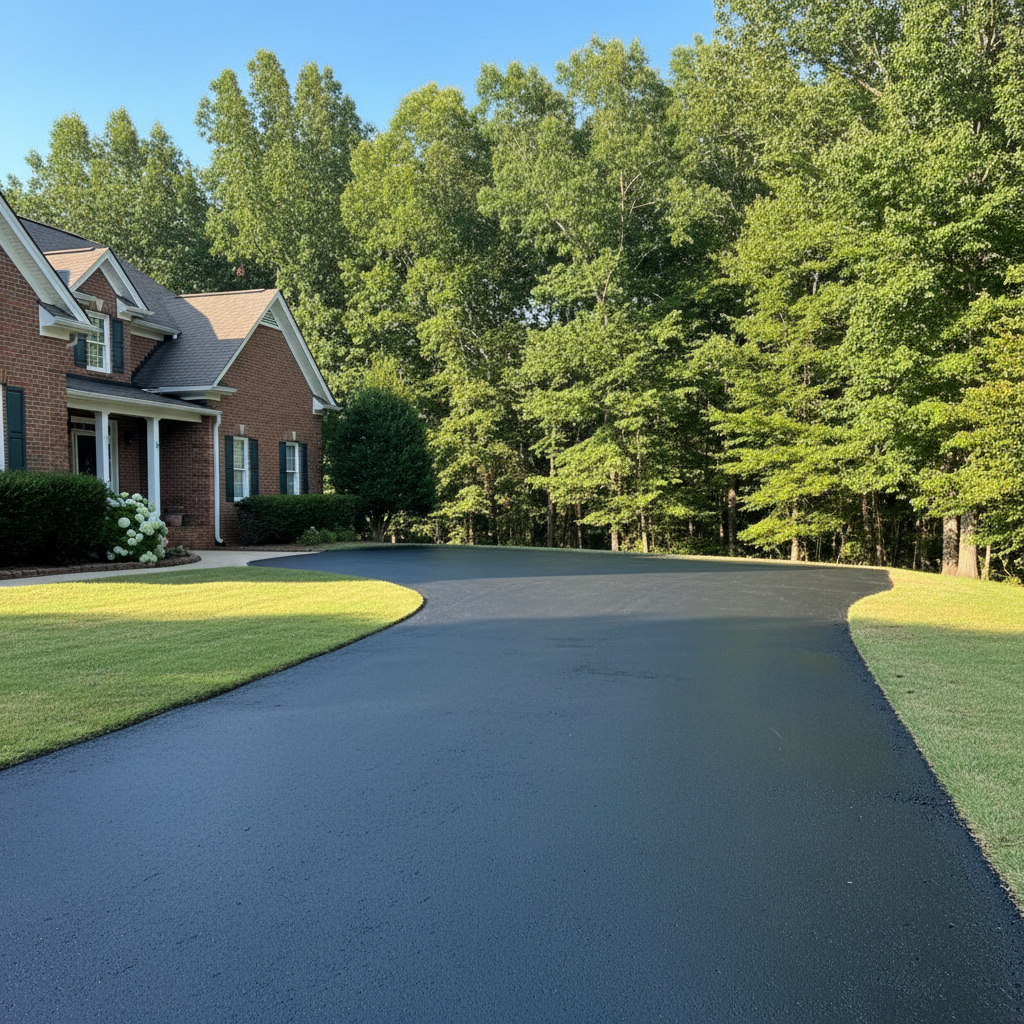
So, you've invested in sealcoating for your asphalt driveway or parking lot. Smart move. It's one of the best ways to protect your pavement from the elements and keep it looking good. But the job isn't done just because the sealcoat's dry. You've gotta take care of it, especially here in Birmingham where our summers are brutal and the ground can shift.
Extending Your Sealcoat's Life: It's All About Protection
Think of sealcoat like sunscreen for your asphalt. It's a barrier. And just like sunscreen, it needs a little help to do its job well. The biggest enemy to fresh sealcoat? Traffic, especially heavy stuff, and chemicals. You want to give that new coat a real chance to cure and harden up.
- Stay Off It: This is the absolute biggest thing. For vehicle traffic, you're looking at 24-48 hours, minimum. Foot traffic? You can usually walk on it after a few hours, but don't drag anything heavy. If you've got a busy commercial lot, I know it's tough, but try to section it off to minimize disruption.
- No Sharp Turns: When you do drive on it, avoid sudden stops, quick accelerations, or sharp turns, especially in the first week or two. That's when the sealcoat is still a bit pliable, and you can scuff it up pretty easily.
- Watch for Leaks: Oil, gas, transmission fluid – these are sealcoat killers. They'll break down the binder in the sealcoat and leave ugly stains. If you see a leak from a car, clean it up quickly. Kitty litter works wonders for absorbing fresh spills.
- Keep it Clean: Sweep off loose dirt, leaves, and debris regularly. This prevents organic matter from breaking down on the surface and keeps abrasive particles from grinding into the sealcoat when cars drive over it.
Regular Maintenance: Small Steps, Big Impact
Once your sealcoat has fully cured, you're not out of the woods. It still needs a little love to perform its best. We're talking about simple stuff that makes a huge difference over the long haul.
- Spot Clean Spills: I mentioned leaks, but even things like paint, solvents, or harsh cleaning chemicals can damage your sealcoat. If something spills, get to it fast. Mild soap and water is usually all you need for general cleaning.
- Address Cracks Early: Sealcoat isn't a miracle worker for existing cracks. It'll fill tiny hairline cracks, sure, but anything bigger than a quarter-inch needs to be filled with a proper crack filler *before* you sealcoat, or as soon as it appears afterward. Water getting into cracks is what causes bigger problems, especially with our freeze-thaw cycles, even if they're not as extreme as up north. Those cracks let water get under the asphalt, weakening the base.
- Trim Overhanging Branches: This might sound odd, but tree sap and falling leaves can stain and degrade sealcoat over time. Keep your trees trimmed back from the edges of your asphalt.
- Mind the Edges: The edges of your driveway or parking lot are often the weakest points. Make sure they're not getting eroded by water runoff. Sometimes a little landscaping adjustment can save you a lot of headache down the road.
Warning Signs: When Your Sealcoat Needs Attention
Your sealcoat will tell you when it's starting to wear out. You just gotta know what to look for. Don't wait until it's completely gone before you think about resealing.
- Fading Color: The most obvious sign. That deep black color will start to fade to a dull gray. This means the protective properties are diminishing, and the sun's UV rays are starting to hit the asphalt directly.
- Aggregate Showing Through: If you start seeing the small rocks (aggregate) in your asphalt poking through the sealcoat, it's a clear sign of wear. The sealcoat layer is getting thin.
- Hairline Cracks Returning: If you had minor cracks filled and sealed, and they're starting to reappear, it's a sign the sealcoat isn't protecting them anymore.
- Rough Texture: A fresh sealcoat should feel relatively smooth. If areas are starting to feel rough or gritty, it means the top layer is eroding.
Here in Birmingham, with our intense summer sun and the occasional heavy downpour, sealcoat can take a beating. I've seen driveways in places like Homewood or Vestavia Hills that get full sun all day long, and they definitely need more frequent attention than a shaded spot.
When to Call a Professional (Like Genesis Asphalt Co.)
Look, you can do a lot of the basic maintenance yourself, but some things are best left to the pros. You should be thinking about calling us when:
- It's Time to Reseal: Generally, for residential driveways, you're looking at resealing every 2-3 years. For commercial parking lots with heavier traffic, it might be every 1-2 years. If you're seeing those warning signs I mentioned, it's definitely time to schedule an evaluation.
- Major Cracks Appear: If you've got cracks wider than a quarter-inch, or alligator cracking (a pattern of interconnected cracks that looks like alligator skin), that's beyond what sealcoat can fix. Those need professional crack filling or even patching.
- Potholes Form: Potholes are a sign of a deeper structural issue. Sealcoat won't help here; you need proper patching and repair.
- Drainage Issues: If you notice water pooling on your asphalt after a rain, that's a problem. Standing water can quickly degrade your pavement and sealcoat. We can assess the grading and recommend solutions.
- You're Just Not Sure: Honestly, if you're looking at your asphalt and just have a gut feeling something's not right, give us a call. We're happy to come out, take a look, and give you an honest assessment. It's better to catch small problems before they become expensive ones.
Taking care of your sealcoat isn't rocket science, but it does require a little attention. A well-maintained sealcoat not only looks better, but it'll save you money on bigger repairs down the line. Keep an eye on it, and don't hesitate to reach out to Genesis Asphalt Co. if you need a hand.